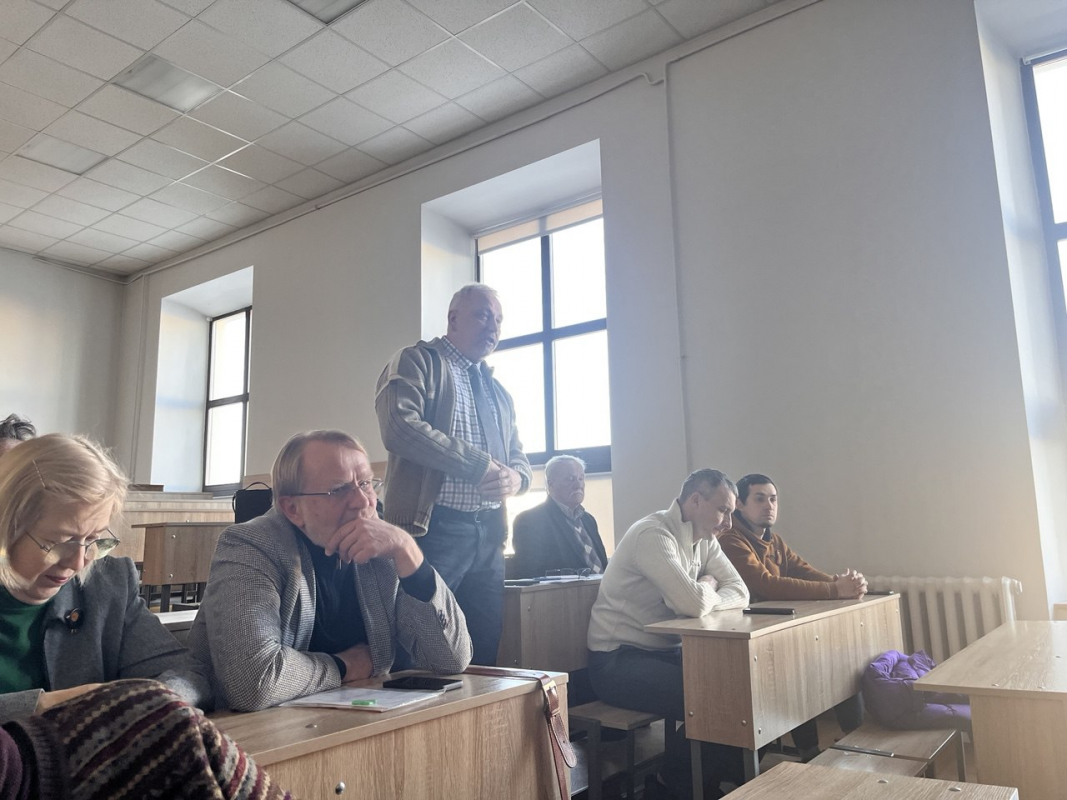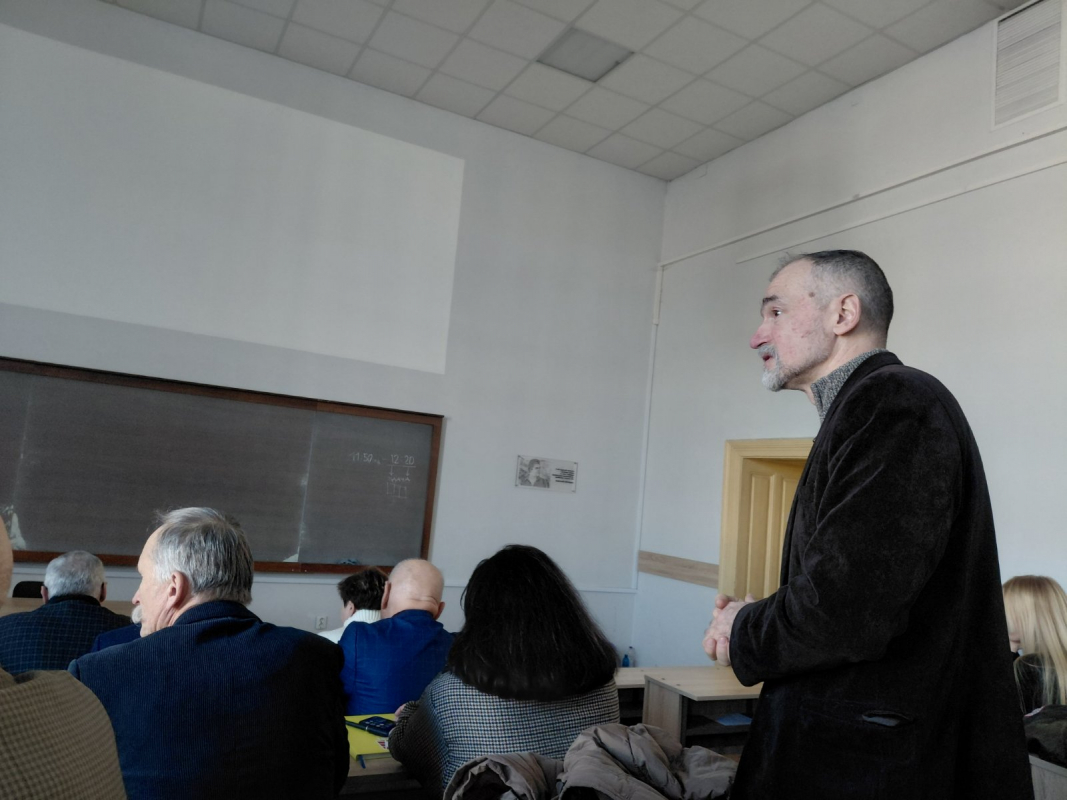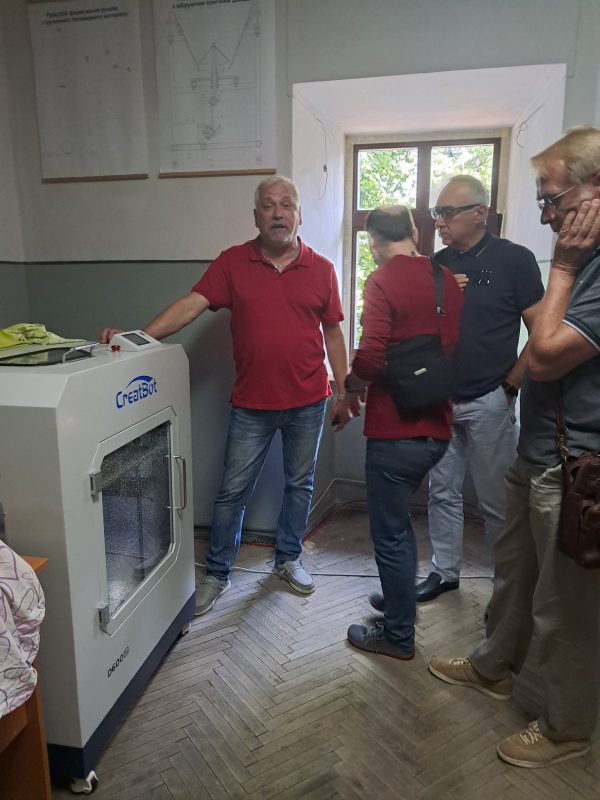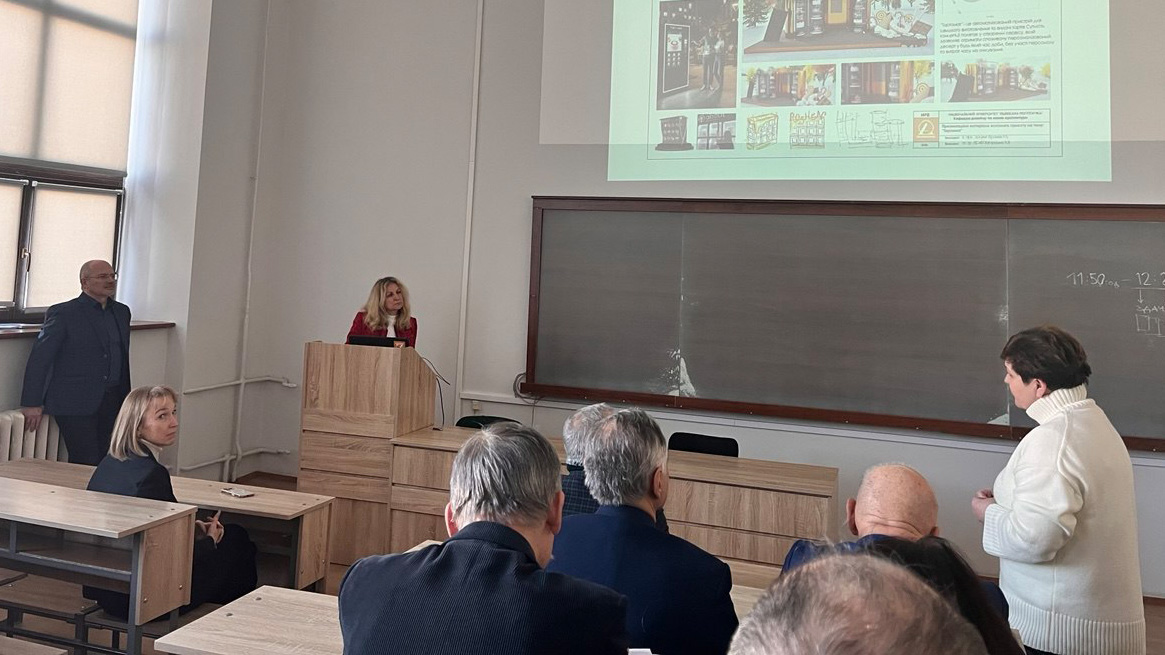
On January 19, 2026, an extended meeting of the Department of Design and Architecture Fundamentals (DAF), the Institute of Architecture and Design, hosted the first presentation of the new educational and professional program «Industrial Design and 3D Modeling» (working title), developed within the specialty B2 «Design», specialization B2.02 «Industrial Design».
Professor Nataliia Shakhovska, Rector of Lviv Polytechnic National University; Professor Yurii Dyba, Director of the Institute of Architecture and Design; Associate Professor Lesia Stetsiv, Director of the Institute of Printing Art and Media Technologies; Professor Vadym Stupnytskyi, Head of the Department of Robotics and Integrated Mechanical Engineering Technologies, the Institute of Mechanical Engineering and Transport; Professor Ihor Hrytsai, Department of Robotics and Integrated Mechanical Engineering Technologies; Professor Yuliia Idak, Head of the Department of Urban Planning and Design; and Professor Ihor Hnes, Head of the Department of Architectural Constructions, attended the extended meeting of the DAF Department.
Professor Svitlana Linda, Head of the Department of Design and Architecture Fundamentals, presented the program. She emphasized that the introduction of the Industrial Design and 3D Modeling program into the educational process of the Department of Architecture and Design is an important and timely step that responds to the current challenges of creative industries and the rapidly evolving technological environment.
The program integrates artistic thinking, engineering logic, and digital tools, preparing specialists capable of designing competitive, functional, and aesthetically balanced products. A significant advantage of the Industrial Design and 3D Modeling program is its implementation at a technical higher education institution – Lviv Polytechnic National University. This creates a unique educational environment where design is organically combined with engineering, advanced technologies, and scientific research.
The peculiarity of the program lies in its potential to develop a truly innovative interdisciplinary product through the involvement of specialists from other Institutes and Departments, particularly experts in robotics, artificial intelligence, and virtual reality. Such synergy enables students to work at the intersection of design and high technologies, create complex, intelligent, and interactive objects, and fosters a new type of designer – technologically oriented, innovation-driven, and capable of effective collaboration within multidisciplinary teams.
Professor Nataliia Shakhovska, Rector of Lviv Polytechnic, took part in the discussion, emphasizing that the program offers broad prospects for students, as 3D modeling and industrial design are among the key competencies in today’s labour market – ranging from product and environmental design to startups, prototyping, and engagement with advanced innovative technologies.
Among the undeniable advantages of the educational and professional program are the development of practical skills, creative and critical thinking, digital literacy, as well as proficiency in modern software tools and production processes. The program fosters innovation and teamwork and prepares students to meet real-world professional challenges. At the same time, its implementation requires the modernization of the material and technical base, continuous professional development of academic staff, and the ongoing adaptation of curricula to rapid technological change. Nevertheless, these challenges are manageable and are outweighed by the program’s strategic benefits and its contribution to the long-term development of the educational environment.
Overall, the Industrial Design and 3D Modeling program represents an investment in the future of the Department, its students, and society as a whole, shaping a new generation of designers – adaptable, technologically proficient, and capable of creating the spatial and object-oriented environment of tomorrow. In the context of wartime realities and Ukraine’s post-war reconstruction, the relevance of such a program is particularly significant, as the country urgently needs specialists who can respond swiftly to emerging challenges, work with innovative materials and technologies, and develop effective, functional, and economically viable solutions.
Industrial design and 3D modeling are becoming important tools in the processes of restoring infrastructure, the living environment, production, rehabilitation and defense facilities, as well as developing the national industry. Thus, the program not only corresponds to modern educational trends, but also fulfills an important social mission, contributing to the reconstruction of the country and the formation of its sustainable, innovative future.